Search This Blog

Monday, December 7, 2015

College Student Helps Lead Campaign that has Divested over one Billion Dollars from the Fossil Fuel Businesses

By Earthscope Media Reporter, Jillian Johns
Fossil fuels have been proven to release harmful greenhouse gasses into the atmosphere and the recent integration of the process of hydraulic fracturing only exacerbates the harmful effects the usage of these fuels have on our environment and ourselves. Jess Grady-Benson is a leader in the Fossil Fuel Divestment Student Network, which aims to help people divest from using fossil fuels. She also recently won a Brower Youth Award for her work. As a recent graduate of Pitzer College in Claremont, California, she has left behind an inspirational legacy. Pitzer is part of the Claremont Colleges, a group of five colleges in which students can attend classes at any of these participating schools when needed.
Benson co-funded the Claremont College Fossil Fuel Divestment Student Network--a group of highly intelligent and determined individuals that influenced the college so much that they recently agreed to switch to alternative fuels and away from the fossil fuel industry. Now, as more than one hundred schools followed suit, the total savings on energy cost is expected to reach one billion dollars.
Students rallying for the divestment of fossil fuels. (http://www.commondreams.org/views/2015/02/18/next-phase-fossil-fuel-divestment-movement-escalation)
“This campaign, I think, is incredibly powerful because it’s really redistributing wealth, it’s building a powerful base of young activists on student campuses, and it is also opening up a political window so that we can actually shift public conjugate...lower influence of fossil fuel industry elections and policy in general, and [the upcoming generations] are all really critical to transitioning us to a cleaner and more just economy,” Benson stated. Not only does the public receive more opportunities to improve their living costs and standards, they also create an improved community aspect of accomplishing something that helps everyone, not just an elite few.   
Benson also stated that, “I think the transition into a cleaner economy is actually an opportunity to redistribute wealth, create more community ownership and democratic practice around community energy production and usage, create more jobs at a local level that is actually empowering the community and move us away from the corporate control that we see over the energy economy currently.”
In discontinuing our uses of products distributed by hugely powerful corporations, we gain a more locally based system, allowing for personal needs to become higher on the list of priorities. By divesting from fossil fuels, we can help save our earth, our atmosphere, our community, and ourselves.
Our tremendous thanks to Jess Grady-Benson. For more on her incredible work, visit http://www.studentsdivest.org/.


Tuesday, December 1, 2015

Could a watery grave be coming for local salmon populations?

Could a watery grave be coming for local salmon populations? 
Humans must look to fix a problem they single-handedly began
by Katherine Podoll

The Salmon population is devastatingly low in Northern California, and it is only getting worse. Over the past decades, a steady decline in these species has led to an in depth investigation of what, exactly, has caused this decline. Salmon are what is known as a keystone species for all other organisms living near or around a creek, meaning that they proved important resources for the surrounding species. Salmon, whose lifecycle brings them from a creek out to the ocean and back to the same creek to spawn and die, carry important nutrients inland which can be spread through the ecosystem by species such as insects and trees, known as vectors. Preston Brown is a biologist who works for SPAWN, an organization based in West Marin whose focus is on preserving and restoring salmon habitat through the restoration of the local Lagunitas Creek as well as reigning in the support of those along other endangered areas throughout Northern California. Brown said that one of the most intriguing things about salmon to him was how “they recycle huge amounts of marine fertilizer into the streams and the forest.” In fact, “some scientists a long time ago figured out that redwood trees that grow next to salmon creeks grew bigger and taller than trees that grew away from salmon creeks." Now what, people have been asking, is the most prominent reason for the Coho Salmon's decline, if they are such a critical species? This blame, like so many others, must be placed solely on ourselves, human beings.
With the increase of man-made infrastructure in recent years, people have looked to turn to anything available to get their resources from. In the mid to late 1900s, dams became a popular form of infrastructure to control water in given areas and also create energy from this water. However, this practice has revealed more problems than solutions. Brown explained how “developing this one resource, water, came at the expense of all the other resources: salmon and wildlife, and the processes in which these forests grow and floodplains are developed and nutrients are deposited, because dams interrupt a lot of natural processes.”
In addition to providing issues on its own, dams exacerbate all other problems in an ecosystem as well. The drought which has plagued California the past four years has, according to Brown, simply been the piece which pushed the salmon over the edge. He describes how over the tens of thousands of years of their existence, the Coho Salmon have experienced other serious droughts and environmental changes, but “because they’re in such low numbers, because they are usually bumping up against the needs of humans, they’re getting even less water in the drought.” The drought is the “nail in the coffin,” Brown says, grimly adding, “and the coffin was built by us.”

Therefore, as the primary cause of such catastrophic ecological problems, it is up to us to fix them, as well. Brown and SPAWN work around the clock in the Lagunitas Watershed to restore destroyed habitat along the creek in order to create a more inviting and safe place for returning salmon. In addition, people in watersheds around Northern California, the United States, and even the world, are working to reduce infrastructure near waterways. “The era of big dams is over,” remarks Brown. He explains how in some places, people are taking dams down due to their environmental harm and cost of upkeeping. In addition, bills are being created to protect these areas, and most simply need a stamp of approval before they are put into action. People are making a difference on a personal level, too, by spreading awareness about salmon issues and working to restore their local watershed. No matter what else is going on in our lives, no matter what other issues present themselves as urgent at a particular moment, it is always essential to remember: it is our fault salmon are in the endangered position they are today, and therefore it is our duty to do everything in our power to fix it.

To learn more about SPAWN or how you can help out, visit their website: https://seaturtles.org/programs/salmon/


Thursday, November 5, 2015

What Today's Trees Reveal

By Michelle Orgel


How can trees give us information about environmental history? We worked with dendrochronologist, Daniel Griffin about his research and findings among the subject.


“Dendrochronology is the study of annual growth increments in trees as a metric for understanding environmental history. So if we break out the word dendrochronology, dendro- means tree, -chrono- is time and -ology is the study of, so it’s the study of time through trees.”


Tree ring data can be used to determine many different key factors of climate change by counting the number of rings on a tree. Each year, trees add a new ring, meaning that each year can tell us something new. Here is Griffin to explain more...  


“We can use tree rings to understand something about past environmental history, because the tree actually records as set of information about what was going on in the environment from one season and one year to the next.”

Griffin’s job is to study dendroclimatology, in which he uses historical and yearly information about trees to answer various questions in regards to climate changes and patterns. An good example of his work is his study of trees in dry locations, specifying with trees that are on the edge of existence. From these trees, he is able to tell the amounts of variation in soil moisture among many years. One major reason why he targets California is because of the climate. California’s climate is dominated by a variability in moisture. A region that experiences much of this are the Oak Woodlands, where there is a low elevation of grasslands, this being a fundamental area for his and his team’s research in order to help them learn about past droughts.

Much thanks to Griffin and his outstanding work. For more information about Griffin and his studies, please visit https://sites.google.com/a/umn.edu/daniel-griffin/

Wednesday, November 4, 2015

What Is The Real Price of Low Gas?

By Gracy Buckholtz
Jess Grady-Benson, a 2015 Brower Youth Award Winner, for her founding of Claremont College’s Fossil Fuel Divestment Campaign. The Campaign’s goals are to take moneyed investments out of the fossil fuel industry. To date the campaign has divested over a trillion dollars from Fossil Fuel companies. (Learn more at —claremontcollegesdivest.wordpress.com) Jess talks about the health issues to related to fracking, and how natural gas seems like the clean energy solution we are looking for, but it may lead to more problems than it solves.

Fracking is the process of drilling into the Earth with a high speed drill and water to release the natural gas trapped in the rocks. Proponents of fracking argue that it makes the U.S less dependent on oil from other countries and that it creates jobs back at home. Opposers bring up the healthy risks involved that the damage that it brings to the environment.

A lot of the issues around fracking are kept quiet because the companies that have made their money fund politicians. Organizations like Jess’s work to divest, to take money out of, the harmful fossil fuel industry. When companies take money out of the industry, they show that they don’t support the morals of the industry, this sends an important message that can reach many people.

“Numerous individuals across the country have experienced high rates of cancer near fracking sites, have experienced higher rates of cancer near fracking sites, have experienced low air quality because of the flaring that they do where they burn the excess natural gas”. People are becoming physically ill in the areas around fracking sites due to the cocktail of gases that are released and then burned off during the extraction process.

Jess points out that while natural gas seems like a clean option to oil and coal, it might not be the solution we’re looking for. “‘Oh we can actually produce the energy we need, still using fossil fuels in the United States’ and claiming that it is has lower CO2 emissions when it’s burned then oil and coal, however it has a high composition of other warming gases, like methane”


While natural gas may seem like the answer we need to “clean”, local energy, the health and environmental damage outweighs the small benefits that it provides. Jess Grady-Benson has worked hard to bring awareness to the issues related to climate change. Her work as co-Founder at Claremont College’s Fossil Fuel Divestment Campaign is not only impressive but has made a real impact.

Saturday, October 24, 2015

How Dry is Your Soil?

How Dry is Your Soil?
(Drought) By Michelle Orgel


Don’t know how moist your soil is? Soil moisture is essential for drought severity because it is about soil moisture rather than simply just rainfall. The easiest way to determine whether your soil  is being affected by the drought is by the Palmer Drought Severity Index. The PDSI was the first drought indicator in 1965 that assesses the status of moisture comprehensively. It is designed to measure water supply and demand by using temperature and precipitation data, primarily reflecting long-term droughts and ways for drought relief to play out. The objective of the PDSI was to provide documentary recordings of moisture measurements so that it was easier to compare those with different locations and time periods. Here is Daniel Griffin with the Blue Oak Study to explain the importance of soil moisture in the environment.

“We’re looking at the combined precipitation and temperature on soil moisture. Metric index of PDSI, which is basically an index of soil moisture and when we look at pdsi and compare that to tree ring reconstruction that go back in time to the past 1,200 years, that where the short term episode from 2012 stands out as exceptional.”

By providing a diverse biological habitat, soil can support the growth of many plants, animals and soil microorganisms. Diving deeper, we can learn why the moisture and characteristics of soil is so important to the environment and the species that live within it. Microbes rely on soil for food. From the soil, they get key nutrients from eating the plant residue left over. They also benefit from the amount of space from healthy soil, being able to move around more comfortably and more free. Plants, on the other hand, need soil for growth purposes. The intake plants get from moist soil allows them to maintain sufficient aeration, in relation to the exchange of soil air with the atmosphere. Animals and humans simply benefit from soil moisture through the idea of healthy growing plants and the essential nutrients from these plants when grown properly. Here is Daniel Griffin again to emphasize on this issue.

“They have a growth history that is closely related to precipitation, but as I described, temperature is also an important component of drought potentially in California and especially in terms of soil moisture. When u have a drier than average year with lower precipitation, soil is not recharged at the level that you might expect in an average year. When summer rolls around, temp starts to play an important role in drying out the soils even further, so when conditions are hot, the atmosphere evaporates moisture from the soil and from biosphere to dry it out even further.”

Biologically, organisms can only withstand a certain amount of heat before it becomes too much for their body to handle. A typical temperature range that soil organisms can handle is 0°C and 60°C, with the exception of some organisms who are able to adapt to such conditions. As Griffin explained,  “when summer comes around, temperature becomes a key role in drying out soils because the hot atmosphere evaporates moisture, drying it out even further.” With the rising temperatures of heat and the lowering amounts of moist soil, organisms are experiencing radical changes in their animations. In a USDA government approved study, researchers heated soil at different temperatures to determine the effects of different organisms in different soils. In their results, they found that as temperature increased, so did diversity. Three microbial groups, fungi, nitrate oxidizers and bacteria were all impacted with a result of inactive cells.

To learn more about this study, and other ways to help, please visit


Your Daily Dose of Synthetics

Your Daily Dose of Synthetics
(Farm Factories)

By Michelle Orgel

Hydrogen Sulfide, ammonia, growth hormones chemical gases; these are all examples of toxins that you could be consuming from buying and eating meats from animals raised in harsh factory farms. As Gene Bauer puts it, “anti-biotic pathogens that are sickening people and in some cases people are dying because the antibiotics that used to be able to treat these people are no longer able to do so.” Thus, meaning that people living in rural areas near farm factories are in danger of catching these chemicals second-hand, and people who buy these products without knowing the health risks are most definitely at risk of these severe injuries.

“When you have animals confined in these warehouses, there are toxic fumes that come from them and anti-biotic-resisten pathogens found in groundwater downstream from these farms because animals are kept in these filfthy, stressful conditions and continually fed enormous quantities of drugs to be kept alive resulting in products of anti-biotic pathogens that are sickening people and in some cases people are dying because the antibiotics that used to be able to treat these people are no longer able to do so.”

Another indirect way to catch these such diseases is through the underground water system. Here is Bauer himself to explain more in depth:

“Many streams across the US, I think the EPA estimated a majority of them have been impaired and animal agriculture has been a reason for that, not only in terms of animal manure leaching into groundwater and surface water and spilling out of lagoons. In terms of crops being grown, 70% of the corn and 90% of soybeans grown in the US  are fed to farm animals and those crops are grown with enormous amounts of pesticides which get into the groundwater and the environment which affects our health with consequences, as well as the effects of those with factory farm animals.”

The things that belong in streams are what have been there for millions of years, those of which are used by organisms to their benefits, including small bugs and plants and low concentrated chemicals. When animals are crammed tight next to each other in farms, their waste funnels into massive lagoons which are prone to breakage, ultimately sending the contaminated liquids to pollute bigger water supplies. If these chemicals and manure enter into the human body, the threats are dire.

As well as human risks, there are environmental risks, no doubt. Wrecks can range from lagoon leaks killing massive numbers of fish, to as destructive as a nutrient pollution in waterways. Water quality throughout the whole country is threatened from the chemicals associated with these spills. These chemicals are known to cause algae explosions, depriving water of oxygen, killing much sea-life.

These are only some of the examples of harm that factory farming can stress on the environment, but there is hope yet. Regulation of factory farms is key, accountability is crucial, and knowledge is strength. Know where your local CAFO’s is located, know your rights of participation, and start helping today. For more information, visit http://www.nrdc.org/water/pollution/nspills.asp

Friday, October 23, 2015

How are you Unknowingly Slaughtering Thousands of Animals?

By Earthscope reporter, Jillian Johns

The ASPCA estimates that around 40% of households own a pet. That means about 40% of people have an animal living in their house in which they treat as they would a child. But what makes these animals different than pigs, chickens, cows, and goats? The Hindu society even worships and respects cows, feeling that they are superior to themselves. Why is it okay to slaughter and kill these types of animals so inhumanely, even though they are not much different than animals we keep at home?

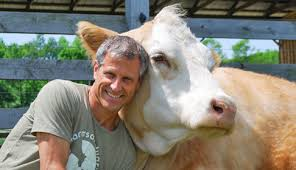
Gene Baur, the creator of Farm Sanctuary, a place where abused farm animals can live in plenty of space with proper food, stated, “In those [animal exploitation and factory farming] businesses the animals are often fed the cheapest thing possible. It’s legal and common, for example, for cows to be fed chicken manure, which sounds crazy, but it is something that is done because it’s a cheap item that the cattle industry can get and at Farm Sanctuary the animals there are seen as our friends, not our food, so things there are completely different.”

Animals have consciousnesses and they all aren’t really different than humans either, however we still continue to slaughter, break, run over, confine the animals where they cannot even walk around, for the sole purpose of then being able to eat them. We kill living beings without anesthesia for our own consumption.


But the animals aren’t the only ones being harmed by the practice of factory farming. “The animals are kept in these filthy, stressful conditions and they are routinely fed enormous quantities of drugs just to be kept alive,” Baur explained, “and that’s resulting in the development of antibiotic resistant pathogens that are sickening people and, in some cases, people are dying because the antibiotics that used to treat these diseases are no longer able to do so.” While some may be able to turn their back on the animal abuses, they won’t be able to turn from human harm, especially if it is someone they love. How we treat these animals says so much about who we are as people and most, if they knew what was going on, would opt not to treat animals cruelly.

According to Baur, “[About] 70% of the corn and 90% of the soybeans grown in the US are fed to farm animals and those crops are grown with enormous amounts of herbicides and pesticides and those get into the groundwater, they get into the environment and they impact our health.” This is a substantial amount of resources we are using to obtain food. Plants get their energy directly from the sun, so when animals eat plants the energy is passed on to them, but usually only around 10% of the energy is able to be transferred. Let’s say there were 100 bean plants; those would only be able to feed 10 animals, and those 10 animals would only be able to feed one human. Now if we ate only plants, in the same amount of resources, 10 people would be fed, rather than just one. In order to feed the greatest amount of people, the most sustainable method would be to eat plants.

The huge amounts of animals bred in order to feed the growing human population, increases the environmental impact placed upon our planet. “Not only are we putting a lot of greenhouse gasses into the environment through the production process with animal agriculture but we’re also destroying some of the planet’s best ways to clean the air. The rain forests have been called the lungs of the planet and we’re cutting them down to grow feed crops for animals.” It has been estimated that 14.5% of greenhouse gas emissions are coming directly from farm animals, especially from cows and their methane emissions, causing global warming and climate change throughout the planet. And especially in the drought we are in, we must be even more environmentally conscious of the resources and huge amounts of water needed to support one animal.

So why are we allowing for this abuse to happen? And what can you do to help prevent it?  To oppose this factory farming, eat meat from humane sources, eat less meat, or become a vegetarian or vegan altogether. Tell people about these poor animals, go visit farms, educate yourself as well as others. If other people see what you are doing to change your ways, they may become inspired, change their own ways, and thus begin a domino effect. Be the start of that effect, just like Gene Baur was. And as he said, “If we can live well without causing unnecessary harm and unnecessary slaughter, why wouldn’t we?”

To learn more about Gene Baur, Farm Sanctuary, and what you can do, visit http://www.farmsanctuary.org/